

SL4
Security Level up to SL4 for individual IEC 62443-4-2 requirements – PASS / SSD series
3
independent penetration testing campaigns (2023 • 2024 • 2026)
24 h
CRA Art. 14 early warning via the ENISA Single Reporting Platform
1
single point of contact: security@seneca.it
01 Regulatory framework 02 SENECA’s approach 03 CVE / PSIRT reporting 04 Devices and solutions 05 Compliance and downloads 06 FAQ
Cybersecurity vulnerabilities and incidents affecting SENECA products, firmware, software, services and systems.
Your contribution helps us make our products and the ecosystems in which they operate more secure.
01 Regulatory framework
Machines, gateways and controllers are now part of the attack surface. Three regulatory levels, three different targets: the organisation, the product and the individual OT component.
Since 1 August 2025, connected radio products (Wi-Fi, LTE, etc.) must meet the cybersecurity requirements of Delegated Regulation (EU) 2022/30, with the harmonised standards EN 18031-1/-2/-3. Once the CRA fully applies, these requirements will be incorporated into the new framework.
From 20 January 2027, the new Machinery Regulation introduces requirements for protection against corruption and unauthorised access affecting safety: automation components integrated into machinery become part of the manufacturer’s assessment.
16/10/2024
NIS2 enters into force in Italy (Legislative Decree 138/2024)
10/12/2024
CRA enters into force
01/08/2025
RED Delegated Act becomes mandatory (EN 18031)
01/01/2026
NIS2: mandatory incident notification
11/06/2026
CRA: conformity assessment bodies
11/09/2026
CRA Art. 14: reporting obligations take effect
20/01/2027
Machinery Regulation applies
11/12/2027
CRA: full application of requirements and CE marking
Harmonised standards supporting the CRA are being published: SENECA updates this page as detailed requirements become binding. Official sources: European Commission – CRA • Text of Regulation (EU) 2024/2847 • ACN – NIS
02 SENECA’s approach
Security is not a cloud service added afterwards: it is integrated into the device’s hardware, firmware and network. IEC 62443 is the design reference; results are verified by third parties.
Process – PSIRT, vulnerability management, CVD
Remote access – encrypted VPN, 2FA, local consent
Network – separate LAN/WAN, OT/IT segmentation
Device
secure boot • signed firmware • encrypted storage
03 CVE / PSIRT reporting
SENECA S.r.l. attaches the utmost importance to information security, data protection, the continuity of its digital services and the security of its products with digital elements, in line with the GDPR (EU 2016/679), NIS2 (EU 2022/2555), CRA (EU 2024/2847), ISO/IEC 27001 and applicable industrial cybersecurity standards.
NIS2 / Incident Management workflow
Incidents or breaches involving information systems, digital services or company data are handled by the Information Security Team under internal Incident Management procedures, including notification to the authorities where required by NIS2.
Product Security / CRA workflow
Reports concerning products with digital elements follow the Product Security & Vulnerability Management process: impact assessment, firmware/software updates, corrective measures and notifications required by the CRA.
Acknowledgement of receipt and unique PSIRT-AAAA-NNN identifier.
Classification, routing to NIS2 or CRA processes and verification of notification obligations.
Reproduction, CVSS assessment, affected products and versions.
Temporary mitigations, development and validation of the fix.
User communication, Security Advisory and case closure.
Do not send passwords, credentials or unnecessary personal data.
SENECA applies a coordinated disclosure approach. After receiving a report, it:
We ask reporters not to publicly disclose exploitable details before a mitigation or fix is available. On request, the researcher’s contribution may be acknowledged in the advisory.
Cyber Resilience Act – Art. 14
From 11 September 2026, SENECA reports actively exploited vulnerabilities and severe incidents affecting the security of its products via the ENISA Single Reporting Platform to the coordinating CSIRT (CSIRT Italia / ACN in Italy). The reporting channel for authorities does not replace security@seneca.it, which remains the point of contact for customers, users, partners and researchers.
Advisories include CVEs, CVSS scores, affected products and versions, the fixed version and recommended measures. New advisories are identified as SENECA-SA-AAAA-NNN.
| Date | Advisory | CVE | CVSS v3.1 | Affected products | Action / fixed version |
|---|---|---|---|---|---|
| 15/09/2026 | Security notice for STRATON Editor 6.71 and earlier Ref. STRATON Security Advisory ID #321328 (Copadata) – PDF |
CVE-2026-84854 | 7.0 High | Windows workstations with SENECA STRATON IDE/PACKAGE 1.9.1.0 and a green Wibu dongle (WibuKey driver ≤ 6.71). SENECA controllers and RTUs are not exposed. | Update the WibuKey driver to version 6.72 or later |
Each report is recorded confidentially, classified, assigned to the relevant technical teams and assessed against regulatory obligations, in a timely, proportionate and confidential manner. SENECA may contact the reporter for further information. Information is shared only with teams that need it and, where required by law, with the competent authorities.
Activities that compromise system availability, modify or delete data, access unnecessary personal or confidential data, compromise third-party systems, DoS/DDoS attacks, social engineering or any unlawful action are not authorised. If you accidentally access confidential data, stop the activity immediately and inform SENECA.
Organisation and responsibilities: the model involves the Information Security Team, Product Security / R&D, IT Manager, Quality & Compliance, the NIS2 point of contact, legal teams and Management. This model enables SENECA to distinguish and correctly manage incidents affecting company infrastructure and those affecting product security.
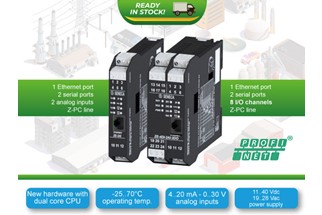
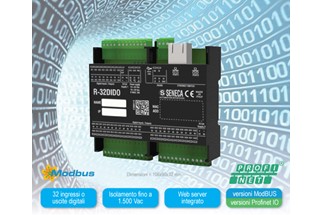
04 SENECA devices and solutions
05 Compliance, services and downloads
Register of independent assessments of SENECA products. Each document is available for download in PDF format.
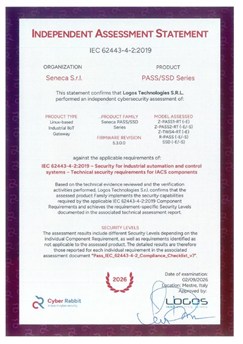
02/09/2026
IEC 62443-4-2:2019
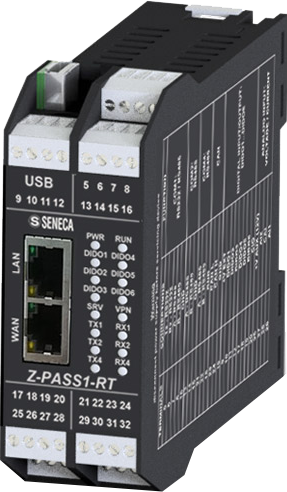
Z-PASS1-RT, Z-PASS2-RT, Z-TWS4-RT, R-PASS, SSD – firmware 5.3.0.0. Assessment by Logos Technologies / Cyber Rabbit.
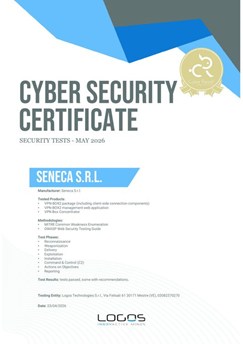
23/04/2026
Penetration test • Passed
VPN-BOX2 package with client components, management web app and VPN Box Concentrator. MITRE CWE, OWASP WSTG.
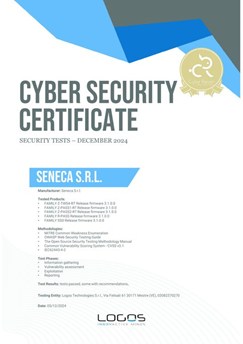
05/12/2024
Penetration test • Passed
Z-TWS4-RT, Z-PASS1-RT, Z-PASS2-RT, R-PASS, SSD – firmware 3.1.0.0. MITRE CWE, OWASP WSTG, OSSTMM, CVSS v3.1, IEC 62443-4-2.
Assessments performed by Logos Technologies S.r.l. (Versivo / Cyber Rabbit). The penetration tests were passed with recommendations, which were implemented in subsequent firmware releases. Details of the Security Levels for each requirement are provided in the IEC 62443-4-2 Compliance Checklist, available on request.
06 FAQ
Yes. The CRA covers all products with digital elements, meaning hardware and software with firmware or a direct or indirect data connection to a device or network. This includes gateways, RTUs, dataloggers, I/O modules with communication interfaces and SENECA software.
From 11/09/2026, manufacturers must report actively exploited vulnerabilities and severe incidents via the ENISA platform (24 h / 72 h / final report). From 11/12/2027, all essential requirements apply: products placed on the market must comply with the CRA and bear CE marking also covering cybersecurity.
No. The CRA’s design requirements apply to products placed on the market from 11/12/2027. However, the reporting obligations under Art. 14 also apply to products already on the market: this is why SENECA handles reports on all products, including those installed before that date.
Email security@seneca.it with the product, code, hardware/firmware versions, description, steps to reproduce, impact and any evidence. You will receive an acknowledgement with a PSIRT identifier. Do not send passwords or credentials.
SENECA informs affected users and publishes Security Advisories on this page and in the Newsroom, including mitigation measures and fixed versions. You can subscribe to the SENECA newsletter to receive technical updates.
The CRA requires manufacturers to define a support period for each product, normally no shorter than 5 years unless a shorter use is expected, during which security updates must be provided. SENECA will specify the support period in the documentation for CRA-compliant products.
It is the standard defining technical security requirements for components of industrial automation and control systems (IACS). Each requirement can be met at a Security Level from SL1 (protection against accidental violations) to SL4 (protection against sophisticated attacks with extensive resources). For the PASS / SSD series, the independent assessment documents the Security Level achieved for each applicable requirement, up to SL4.
NIS2 requires risk management throughout the supply chain as well. Devices with strong authentication, encryption, segmentation, audit logs and secure updates, together with independent testing and compliance documentation, provide the evidence required in questionnaires and audits for essential and important entities.
Connected radio products placed on the market from 1 August 2025 are subject to the cybersecurity requirements of Delegated Regulation (EU) 2022/30 (EN 18031). Models such as Z-LTE-CEI and MY2-CEI comply with the RED DA; for other models, the product’s EU Declaration of Conformity is authoritative.
The CRA requires manufacturers to draw up a software bill of materials (SBOM) as part of the technical documentation. SENECA is integrating the SBOM into its release process; information on third-party components can be provided on request as part of audits and security questionnaires.
Download firmware and software only from the official website www.seneca.it or through SENECA support channels. On PASS / SSD series devices, firmware is digitally signed and secure boot prevents unauthentic images from starting.
Change credentials at first login, enable 2FA where available, disable unused services and ports, separate the OT network from the IT network, use only encrypted VPNs for remote access (e.g. LET’S / VPNBOX2), send logs to a SIEM, back up the configuration and install security updates regularly.
From 20/01/2027, machinery manufacturers must consider protection against corruption and unauthorised access that could compromise safety. Components with documented IEC 62443-4-2 requirements, intervention logs and traceable updates simplify this assessment.
Yes, on devices you own and in test environments, in accordance with the rules set out on this page: no impact on production or third-party systems, no DoS against SENECA services and no social engineering. Report results to security@seneca.it in line with coordinated disclosure principles.